How about having your own online storefront?
Kyte can help you!

Peptides
BPC-157 & TB-500 20mg
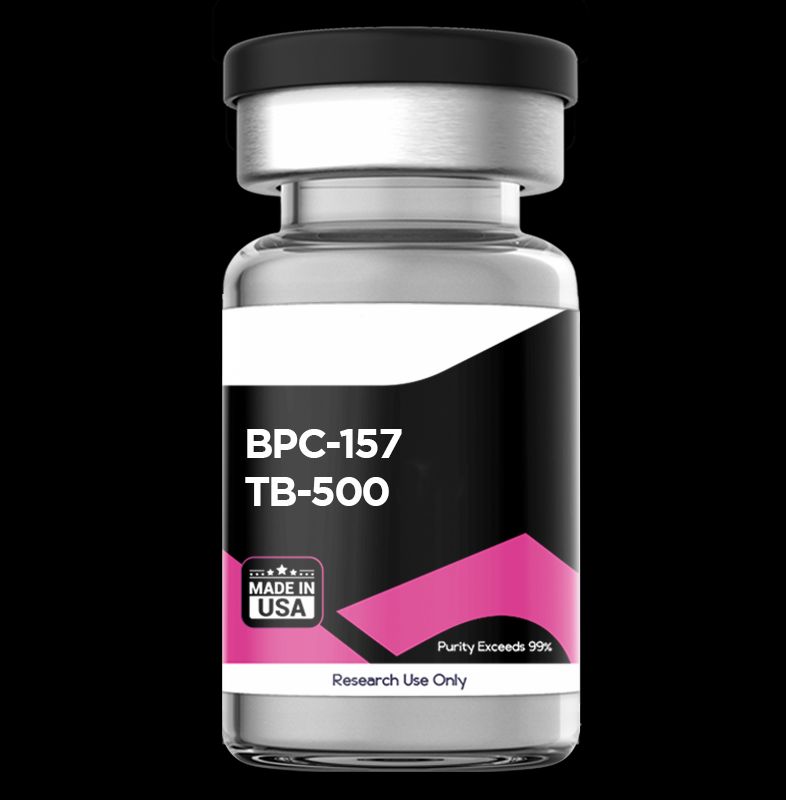
$30.00
DESCRIPTION
BPC-157 & TB-500 — Research Peptide Blend
BPC-157 (Pentadecapeptide BPC-157) and TB-500 (synthetic thymosin beta-4 analog)
are laboratory peptides explored separately in preclinical models for roles in tissue protection and repair.
Together, they are often studied as a complementary blend: BPC-157 for endothelial/angiogenic and
matrix-oriented signaling; TB-500 for cytoskeletal dynamics, cell migration, and wound remodeling.
What They Are
BPC-157: 15-amino-acid pentadecapeptide studied for effects on endothelial integrity,
angiogenic signaling, nitric-oxide–linked pathways, and collagen matrix organization.
TB-500: 43-amino-acid analog of thymosin β4, examined for actin binding/sequestration,
cell motility, microtubule/cytoskeleton remodeling, and re-epithelialization in injury models.
Proposed Mechanisms (Preclinical)
BPC-157
Endothelial protection & pro-angiogenic signaling (NO-linked pathways; early-growth-response factors).
Matrix/collagen support and fibroblast migration in tendon/ligament models.
Inflammation modulation and potential neuroprotective signaling (model-dependent).
TB-500
Actin-binding motif LKKTETQ associated with cytoskeletal reorganization and cell motility.
Wound-healing biology: re-epithelialization, angiogenesis, granulation-tissue quality (model-dependent).
Inflammation-pathway modulation (e.g., miR-146a/IRAK1/TRAF6 axis, exploratory).
Selected Research Highlights
Skin/Wound Models: TB-500 (Tβ4) associated with faster re-epithelialization and contraction vs. controls in animal studies; small clinical datasets in chronic wounds have explored dose-response over multi-week protocols.
Tendon/Ligament: TB-family peptides reported more organized collagen and improved mechanical properties post-injury; BPC-157 associated with fibroblast migration and collagen deposition in tendon explants.
Muscle: BPC-157 explored in steroid-injury muscle models for functional restoration; TB-family peptides investigated for cytoskeletal remodeling and angiogenesis in cardiac ischemia models.
Angiogenesis & Matrix: Both peptides studied for capillary density/neo-vessel formation and ECM organization under injury stressors.
Chemical Information
BPC-157 — Formula: C62H98N16O22 · MW: 1419.5 g/mol
TB-500 — Formula: C212H350N56O78S · MW: 4963 g/mol
Specifications
Form: Lyophilized powders (research-grade)
Purity: ≥99% (HPLC); COA per lot available
Packaging: Sealed vials suitable for laboratory handling
Storage & Handling
Store lyophilized vials in a cool, dry place, protected from light.
After reconstitution: refrigerate at 2–8 °C.
For long-term stability: store at −20 °C; avoid repeated freeze–thaw cycles.
Compliance Notice
For laboratory research use only. Not for human or veterinary use. Information is provided
for educational discussion of preclinical literature and does not constitute medical claims.
Peptides
BPC-157 & TB-500 20mg
$30.00